
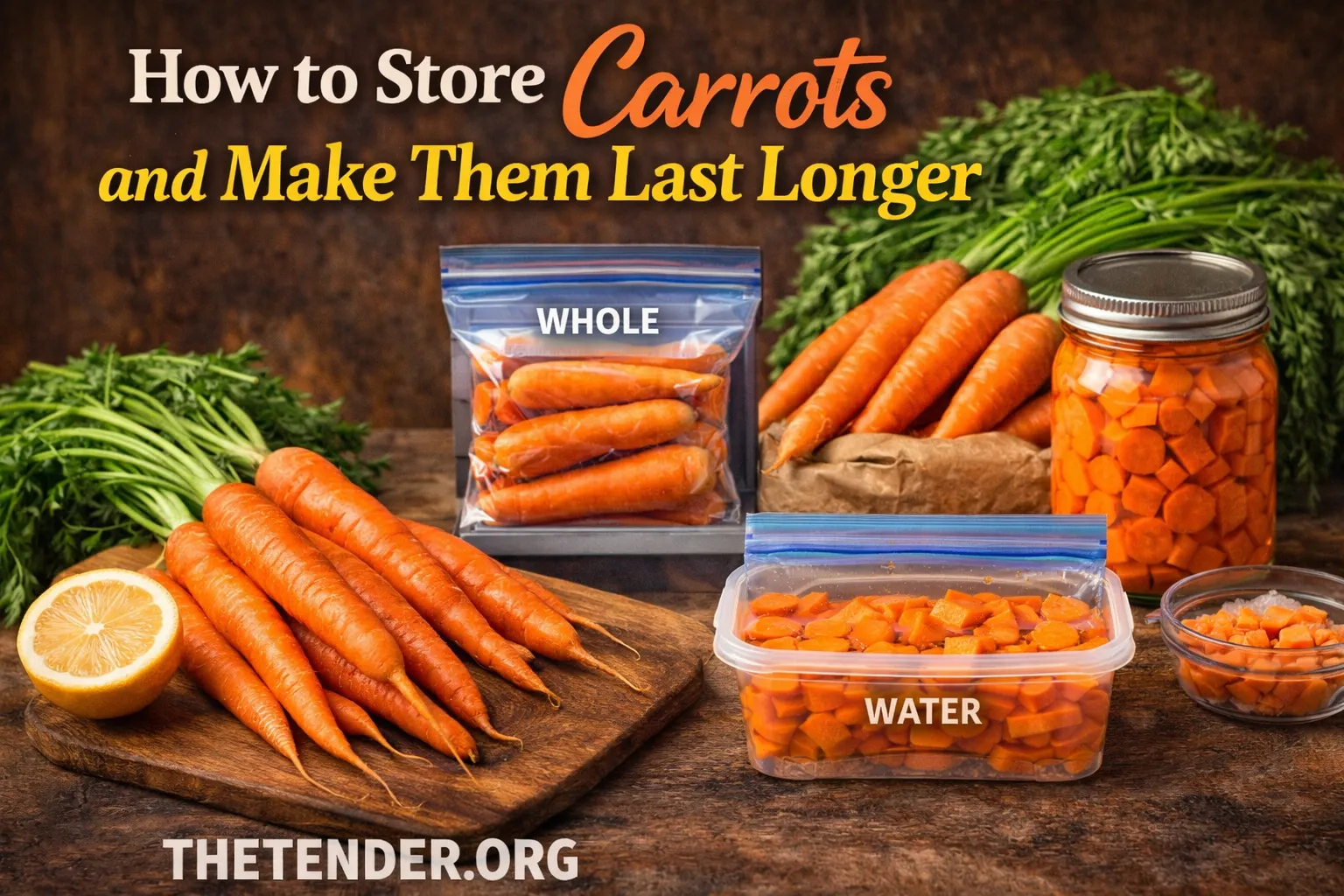
How to Store Carrots and Make Them Last Longer at Home
Carrots are one of the most commonly used vegetables in home kitchens. They are affordable, nutritious, and versatile enough for raw snacks, cooking, soups, and baking. Despite their popularity, many people struggle to keep carrots fresh for long periods. Improper storage often leads to limp texture, bitterness, or spoilage.
Learning how to store carrots and make them last can save money and reduce food waste. Carrots may look hardy, but they lose moisture quickly if stored incorrectly. Temperature, humidity, and preparation all affect how long they remain crisp and safe to eat.
This guide explains every storage method in detail. You will learn how to store carrots in the fridge, freezer, pantry, and cellar. It also covers spoilage signs, common mistakes, and best practices backed by food storage science.
Why Proper Carrot Storage Matters?
Carrots are root vegetables with high water content. Once harvested, they naturally begin to lose moisture. This process causes carrots to become limp, rubbery, or bitter if not stored properly. For families who cook regularly, learning how to store carrots and make them last is essential.
Correct storage slows moisture loss and reduces exposure to bacteria and mold. It also preserves nutrients such as beta-carotene and fiber. Poor storage not only affects taste and texture but can also lead to food safety issues.
Understanding how carrots respond to air, moisture, and temperature allows you to extend their shelf life safely and effectively. Seasonal carrots can stay fresh longer if you know how to store carrots and make them last.
How Long Do Carrots Last With Proper Storage?
Carrot shelf life depends heavily on how they are stored and prepared. Whole carrots last significantly longer than cut or peeled ones. Many people ask, can you freeze carrots to preserve them for later use.
Shelf Life of Whole Raw Carrots
Whole raw carrots last 3 to 4 weeks in the refrigerator when stored correctly. In some cases, they can last even longer if humidity is well controlled. It’s helpful to know how long do carrots last in the fridge to prevent spoilage.
The outer skin protects the carrot from bacteria and moisture loss. Keeping carrots whole until use is one of the best ways to extend freshness. Storing carrots loose in the fridge without protection shortens their lifespan.
Shelf Life of Peeled or Cut Carrots
Peeled or cut carrots last 7 to 10 days in the fridge. Removing the skin exposes the flesh to air and moisture loss. These carrots require airtight containers and often benefit from water storage to stay crisp. Prepared carrots should be checked frequently for sliminess or odor.
Best Way to Store Carrots in the Refrigerator
The refrigerator is the most reliable place to store carrots for long-term freshness. However, placement and packaging matter greatly. Chefs recommend different methods for how to store carrots and make them last at home.
Ideal Refrigerator Temperature for Carrots
Carrots store best at 32°F to 40°F. This temperature range slows spoilage while preventing freezing damage. Avoid placing carrots near the fridge door. Temperature fluctuations shorten shelf life and increase moisture loss. Consistent cold temperatures help carrots retain crunch and flavor.
Where to Place Carrots in the Fridge?
The vegetable crisper drawer is the best location. Crispers are designed to maintain higher humidity, which carrots need. Some home cooks wonder, do carrots need to be refrigerated for optimal freshness. Keep carrots away from ethylene-producing fruits like apples and bananas. Ethylene gas speeds up aging and bitterness.
Separate carrots from strong-smelling foods to avoid odor absorption. Before freezing or refrigerating, it’s good to know how to store carrots and make them last.
How to Store Carrots in Water?
Water storage is one of the most effective methods for keeping carrots crisp.
Why Water Storage Works?
Carrots lose moisture quickly when exposed to dry air. Storing them in water replaces lost moisture and prevents wilting. Freezing vegetables raises the question, can carrots be frozen safely at home. This method is especially helpful for peeled or cut carrots. It keeps them firm and fresh for longer periods.
Water acts as a protective barrier against air exposure. Following simple steps helps you master how to store carrots and make them last.
Step-by-Step Water Storage Method
Place peeled or cut carrots in a clean container. Cover completely with cold water. Seal with a lid and refrigerate. Change the water every 2 to 3 days to prevent bacterial growth. Always keep carrots submerged. This method can keep carrots crisp for up to 10 days.
How to Store Carrots Without Water?
Some people prefer dry storage for convenience. This method works best for whole carrots. One of the most common questions in the fridge section is how to store carrots and make them last.
Using Paper Towels for Moisture Control
Wrap carrots loosely in a paper towel before placing them in a perforated plastic bag. The towel absorbs excess moisture while preventing dehydration.
This balance reduces sliminess and mold growth. Before cooking or storing, check how long do raw carrots last in the fridge. Replace paper towels if they become damp.
Using Airtight Containers or Bags
Airtight containers limit air exposure but can trap moisture. For best results, include a paper towel inside the container. If you want to keep your produce crisp, learn how to store carrots and make them last. Avoid sealing carrots without airflow unless moisture is controlled. This method works well for short-term storage.
Should You Remove Carrot Tops Before Storing?
Carrot tops draw moisture from the root even after harvest.
Why Removing Tops Extends Shelf Life?
The greens continue to pull moisture from the carrot. This causes faster wilting and bitterness. Removing tops immediately after purchase preserves moisture in the root. Store tops separately if you plan to use them.
How to Store Carrot Greens Safely?
Carrot greens last only 1 to 2 days in the fridge. Store them like fresh herbs in a damp paper towel. Use greens quickly in pestos or garnishes.
Can You Store Carrots at Room Temperature?
Room temperature storage is only suitable for short periods. Many food blogs explain how to store carrots and make them last for soups and salads.
Short-Term Counter Storage
Carrots can sit out for 1 to 2 days if the room is cool. Warm temperatures speed up dehydration. Avoid sunlight and heat sources.
This method is not recommended for long-term storage. Knowing how to store carrots and make them last reduces waste in the kitchen.
Root Cellar Storage Conditions
In a root cellar, carrots can last 2 to 4 months. Ideal conditions include cool temperatures and high humidity. Store carrots in sand or sawdust to maintain moisture. This method is ideal for bulk storage.
How to Freeze Carrots for Long-Term Storage?
Freezing is an excellent way to preserve carrots for months. Beginners often ask how to store carrots and make them last without losing flavor.
Why Blanching Is Necessary Before Freezing?
Blanching stops enzyme activity that causes flavor and color loss. Freezing raw carrots without blanching reduces quality. Blanching also cleans the surface and improves texture after thawing. This step is essential for best results.
Step-by-Step Freezing Method
Wash and peel carrots. Cut into desired sizes. Blanch in boiling water for 2 to 3 minutes. Cool immediately in ice water. Drain and dry thoroughly. Freeze in airtight freezer bags. Frozen carrots last 10 to 12 months.
How Long Do Frozen Carrots Last?
Freezing is one of the most effective ways to extend the shelf life of carrots, especially when storing large quantities. While freezing stops bacterial growth, it does not stop quality changes completely. Over time, frozen carrots can lose flavor, color, and texture if not packaged correctly. Understanding realistic storage timelines helps you maintain both safety and quality.
Best Quality Timeframe
Frozen carrots remain safe to eat indefinitely as long as they stay frozen at 0°F or below. However, quality slowly declines due to dehydration and oxidation. For best taste, color, and texture, frozen carrots should be used within 10 to 12 months.
Poor packaging allows air to reach the carrots, leading to freezer burn. Freezer burn causes dry spots, dull color, and bland flavor. While freezer-burned carrots are still safe, their texture may become tough or grainy. Proper airtight sealing significantly slows this process and preserves quality longer.
How to Thaw Frozen Carrots?
Frozen carrots do not require thawing before cooking. They can be added directly to soups, stir-fries, casseroles, and stews. Cooking from frozen helps retain structure and prevents excess moisture loss. Proper refrigeration is key when learning how to store carrots and make them last.
If carrots are thawed, their texture will soften noticeably. This makes them better suited for blended soups, mashed dishes, or slow-cooked recipes. Avoid refreezing thawed carrots, as repeated freezing further degrades texture and flavor.
Signs That Carrots Have Gone Bad
Recognizing spoilage signs early prevents foodborne illness and unpleasant flavors. Carrots often show gradual changes before becoming unsafe, which makes regular inspection important. Texture, smell, and appearance should always be evaluated together rather than relying on one sign alone. Gardeners often share tips on how to store carrots and make them last after harvest.
Texture Changes
Slimy or sticky carrots indicate bacterial growth and should be discarded immediately. This texture often appears after prolonged moisture exposure or improper refrigeration. Mushy carrots are also a strong sign of spoilage.
Limp carrots without slime are usually dehydrated rather than spoiled. These may still be safe to eat if no odor or mold is present. However, excessive softness combined with moisture usually means the carrots are no longer safe.
Smell and Visual Changes
A sour, fermented, or rotten smell is a clear indication that carrots have gone bad. Fresh carrots have little to no odor. Any strong or unpleasant smell means the carrots should not be consumed.
Visible mold, whether white, green, or black, means the carrots are unsafe and should be discarded completely. A white chalky film, often called “white blush,” is dehydration rather than mold. This can be peeled off if the carrot is otherwise firm and odor-free.
Common Mistakes When Storing Carrots
Many carrot storage problems happen due to small but repeated habits. These mistakes accelerate moisture loss, bacterial growth, and flavor changes. Avoiding them can significantly extend shelf life.
Storing Carrots Uncovered
Uncovered carrots lose moisture rapidly in the refrigerator. This leads to limp texture, bitterness, and surface dryness. Exposure to circulating air also increases oxidation.
Carrots should always be stored in a bag, container, or wrapped material that limits airflow while still managing moisture. Even a simple paper towel barrier can improve longevity.
Washing Carrots Before Storage
Washing carrots before storage introduces surface moisture. This moisture encourages mold growth and sliminess, especially in sealed containers. For meal prep, understanding how to store carrots and make them last keeps your vegetables fresh.
Carrots should be stored unwashed and cleaned only right before use. If washing is necessary, they must be completely dried before refrigeration to reduce spoilage risk.
Meal Prep and Carrot Storage
Carrots are popular for meal prep, but preparation shortens shelf life if not handled properly. Once cut or cooked, carrots become more vulnerable to moisture loss and bacterial growth.
Best Practices for Prepped Carrots
Pre-cut carrots should be stored either submerged in clean water or in airtight containers with controlled moisture. Refrigeration is mandatory at all times. Water should be changed every 2 to 3 days to maintain freshness.
Containers should be clearly labeled with prep dates. Even properly stored prepped carrots should be used within recommended timelines to avoid quality and safety issues.
Storing Cooked Carrots
Cooked carrots last 3 to 5 days in the refrigerator when stored in airtight containers. Cooling them quickly after cooking helps reduce bacterial growth.
If cooked carrots will not be used within this period, freezing is the best option. Freezing preserves safety and allows long-term storage without significant nutrient loss. If you buy carrots in bulk, it’s important to know how to store carrots and make them last.
Health and Nutrition Impact of Proper Storage
How carrots are stored affects not only freshness but also nutritional value. Poor storage conditions can reduce vitamin levels and increase the risk of contamination.
Preserving Beta-Carotene
Beta-carotene is sensitive to heat, light, and oxygen. Cold, dark storage conditions help preserve this nutrient. Refrigeration and freezing slow nutrient degradation significantly.
Proper storage ensures carrots retain their bright color, natural sweetness, and nutritional benefits over time.
Food Safety Considerations
Spoiled carrots can cause digestive discomfort and foodborne illness. Bacterial growth increases when carrots are stored improperly or consumed past safe limits.
Maintaining cleanliness, temperature control, and proper storage methods reduces these risks. When carrots show multiple spoilage signs, discarding them is always the safest choice. Many home cooks want to learn how to store carrots and make them last for weeks.
Carrot Storage Methods
| Storage Method | Shelf Life |
| Whole carrots in fridge | 3–4 weeks |
| Cut carrots in fridge | 7–10 days |
| Carrots in water | Up to 10 days |
| Frozen carrots | 10–12 months |
| Root cellar storage | 2–4 months |
Frequently Asked Questions – FAQs
Conclusion
Knowing how to store carrots and make them last helps reduce waste and maintain food quality. Whole carrots stored with proper moisture and temperature can last weeks. Freezing offers long-term preservation when done correctly.
Always remove carrot tops, control moisture, and monitor for spoilage signs. With proper storage, carrots stay fresh, crisp, and safe far longer than most people expect. Unlock fresh insights through our regularly updated articles on THETRENDER.